Species
We cut almost anything, from the hardwood staples people ask for by name — brown maple, white ash, oak, cherry — through to exotics like mahogany and teak. If you know what the old part is, say so and we'll match it. If you don't, send a photograph and we'll tell you what you're looking at, or put a swatch in the post so you can hold it against the real thing.
- Black WalnutDark, warm, close-grained.Swatch by post
- Hard MaplePale, hard, takes a stain.Swatch by post
- Red OakOpen grain, the traditional choice.Swatch by post
- White AshTough and pale, strong figure.Swatch by post
- CherryDarkens with age.Swatch by post
- BeechEven grain, hard wearing.Swatch by post
- Ambrosia MapleStreaked with beetle figure.Swatch by post
- PineSoft, cheap, knots and all.Swatch by post
Exotic timbers: just ask. Purpleheart, ebony, padauk, wenge, whatever you have in mind. Some we can land in a week and some we can’t get at all, and we would rather tell you which than let you guess.
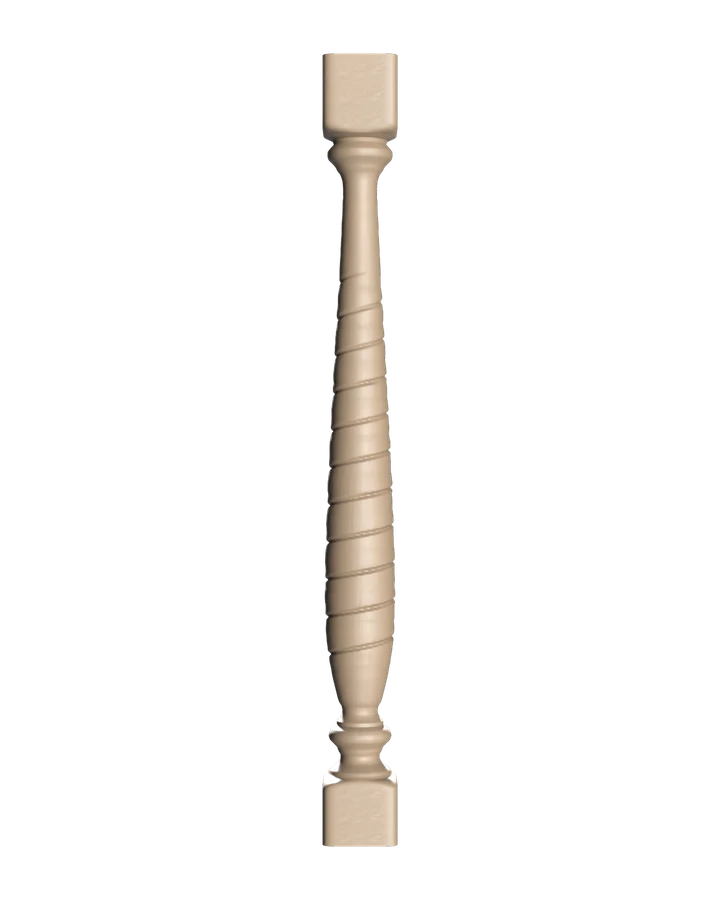
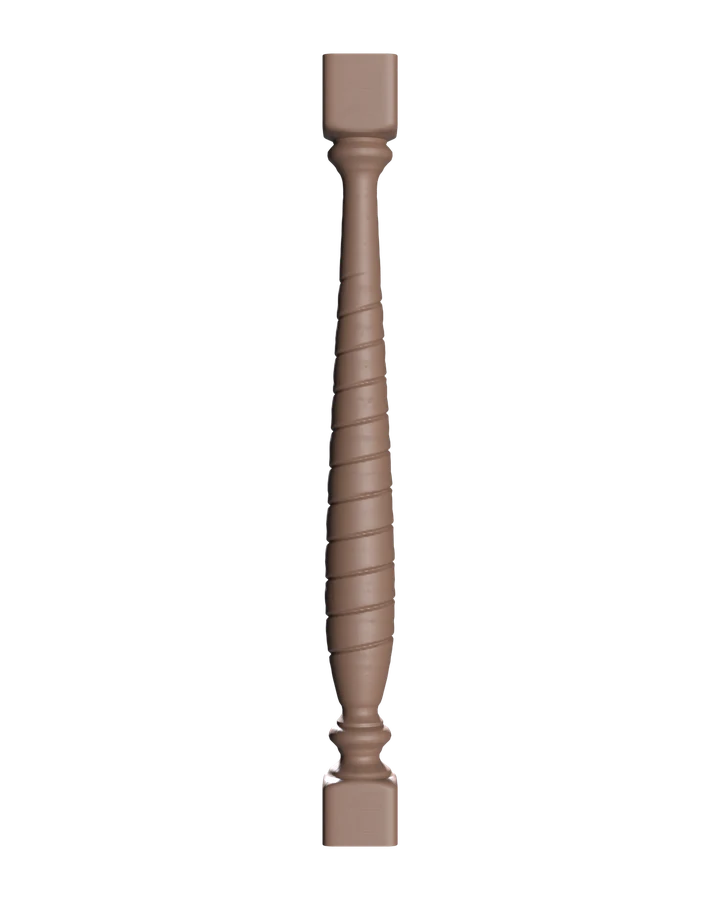
Five timbers, side by side
The same rope-twist baluster, to the same drawing, in five timbers. Every plate is rendered from the profile we actually measured, so the shape is exact and it’s the same shape the drawing describes. Treat the colour as a guide only: these are renders rather than photographs, and a screen is a poor place to pick a timber. That is what the swatches are for.
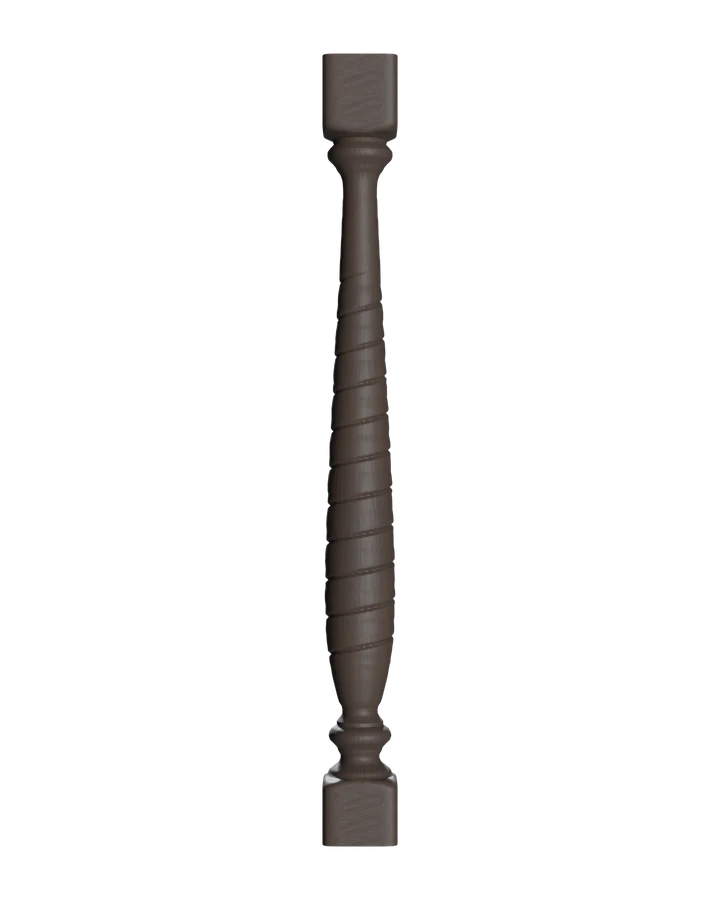 Black Walnut
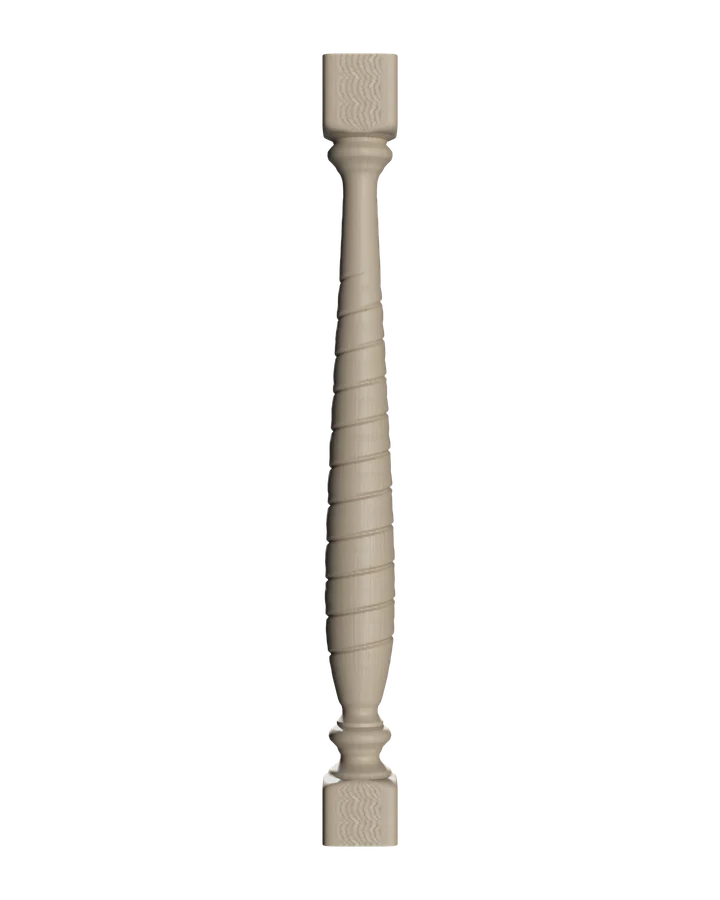 White Ash
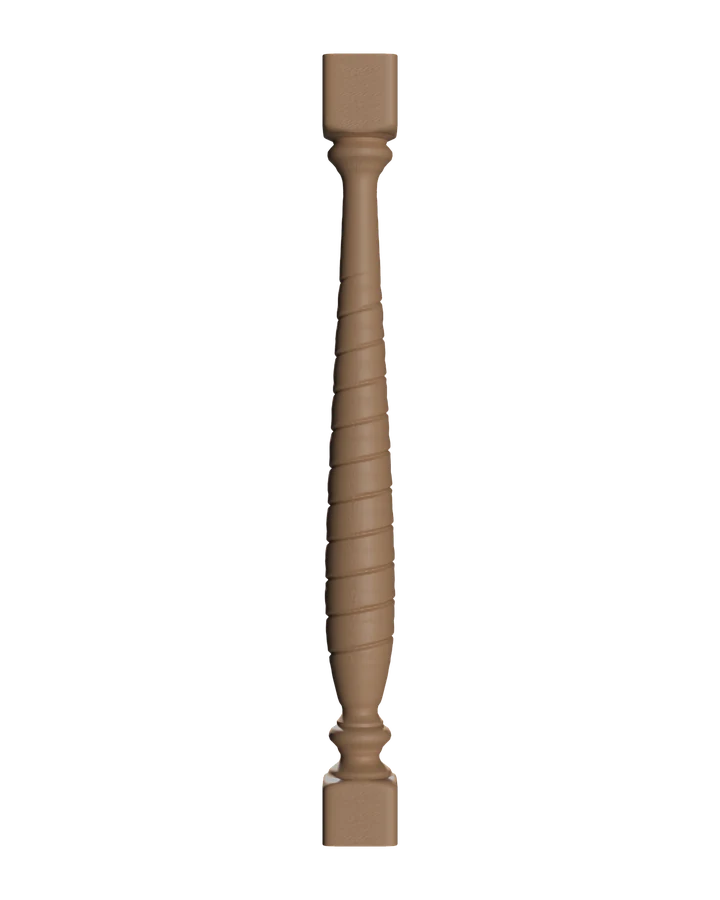 Red Oak
 Hard Maple
 Cherry
Not sure what you have?
Most people are not, and there’s no reason you should be. Wood that’s been finished and aged under a century of varnish doesn’t look much like the sample photographs, and the same species can come out four different colours depending on how it was cut.
Send a photograph of the part next to something for scale, or bring it in. We will tell you what it is, and whether it’s worth matching exactly or whether something close and cheap will look better under the light it’s going to live in.
Matching an old finish
New timber next to a hundred-year-old staircase will look wrong even in the same species, because the old wood has darkened and the new has not. Two ways out: match the species and accept that it will darken into place over a few years, or pick a species that starts darker than the original so it ages down onto it.
We will usually recommend the second if the staircase gets direct light, and the first if it does not.
Want to see the timber first? We'll post you a swatch.
Tell us which species you want to see in the hand, and an address. We send them out free, because you can’t judge a timber from a screen.